
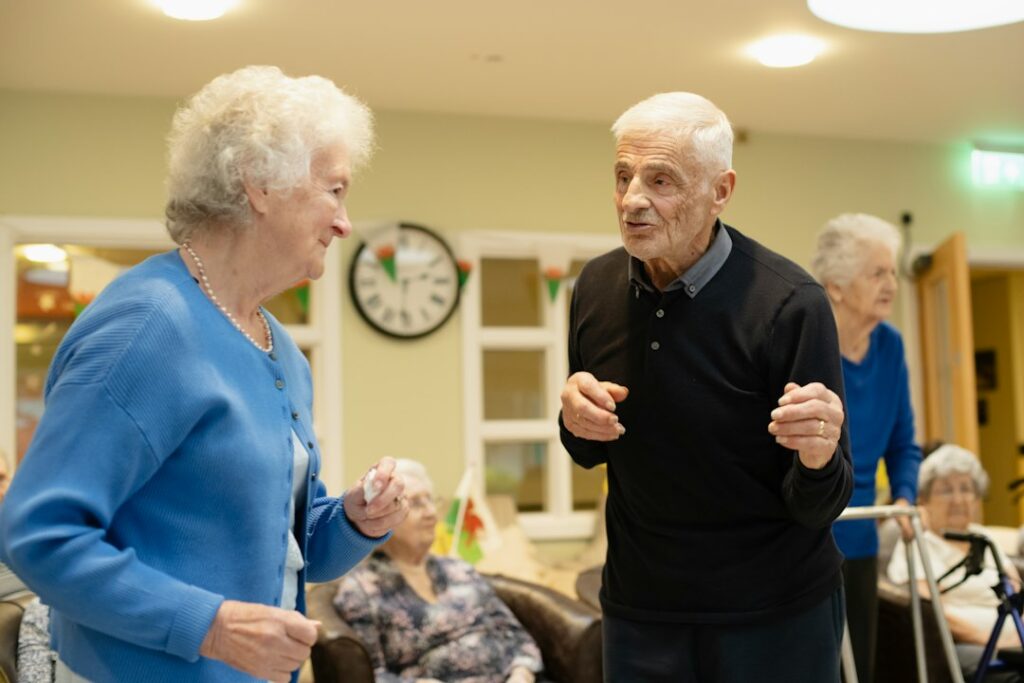
Assisted living can support senior mobility by combining safe surroundings, regular movement, personal assistance, and opportunities for daily activity. The goal is not simply to help residents get from one room to another. It is to preserve strength, confidence, balance, and independence for as long as possible.
What does mobility mean for an older adult?
Mobility includes more than walking. It also involves standing from a chair, getting in and out of bed, using the bathroom, climbing a few steps, reaching for belongings, moving through a dining area, and participating in social activities.
A resident may use a cane, walker, wheelchair, or another mobility aid and still be considered active and mobile. The more useful question is whether the person can move safely and participate in meaningful routines.
Assisted living may help residents maintain mobility by offering support before a minor difficulty becomes a major loss of function. For example, a resident who feels unsteady in the morning may receive help getting dressed, walking to breakfast, or navigating a wet floor. That assistance can reduce risk without requiring the resident to stop moving altogether.
How does assisted living encourage daily movement?
Regular activity is one of the most important parts of maintaining mobility. In an assisted living setting, movement is naturally built into the day through ordinary routines.
Residents may walk to meals, visit common areas, attend activities, spend time outdoors, or move between rooms instead of remaining in bed or seated for most of the day. These short periods of walking may seem modest, but they help reinforce balance, leg strength, coordination, and confidence.
Daily routines may include:
- Walking to and from meals
- Standing during personal care tasks
- Participating in seated or standing exercise
- Moving through hallways with appropriate support
- Joining group activities
- Practicing transfers between a bed, chair, and wheelchair
- Spending time outside when surfaces and weather conditions are safe
This kind of frequent, moderate movement can be more realistic than expecting an older adult to complete one long exercise session.
Can assisted living provide exercise for balance and strength?
Many assisted living communities offer activities designed to support balance, flexibility, endurance, and muscle strength. Exercises may be adapted for residents who stand independently, use mobility equipment, or need to remain seated.
Common examples include gentle leg lifts, repeated sit-to-stand movements, ankle exercises, stretching, light resistance work, walking practice, and balance activities performed near a stable surface. Some residents may also participate in therapy or individualized exercise plans ordered by a medical provider.
Exercise should match a person’s health, abilities, medications, pain level, and fall history. A resident recovering from surgery or living with arthritis, Parkinson’s disease, stroke-related weakness, or another condition may need a more tailored approach.
The purpose is not athletic performance. Functional goals are often more meaningful, such as being able to stand long enough to prepare for a meal, walk to an activity, or transfer safely from a wheelchair.
How does the physical setting affect mobility?
A well-organized environment can make movement safer and less tiring. Clear walking paths, adequate lighting, stable handrails, accessible bathrooms, and appropriately placed furniture all reduce obstacles.
Good design also helps residents make decisions with less confusion. A clearly visible dining area, bathroom, or activity room may reduce wandering and unnecessary backtracking. Seating placed along longer hallways can allow a resident to rest without returning to bed.
In Sinking Spring, seasonal conditions can also affect mobility. Snow, ice, wet leaves, and rain may make outdoor walking more difficult during parts of the year. Safe planning may include checking walking surfaces, choosing indoor routes, using suitable footwear, and adjusting activities during hazardous weather.
The indoor environment matters just as much. Glare, dim lighting, loose rugs, crowded furniture, and slippery floors can create problems even when the weather is clear.
Does assistance make older adults less independent?
Not necessarily. The effect depends on how assistance is provided.
Doing every task for a resident may reduce opportunities to move and practice skills. Appropriate support is different. It allows the resident to complete as much of an activity as possible while providing help with the parts that are unsafe or too difficult.
For example, a staff member might remain nearby while a resident walks with a walker, provide steadying support during a transfer, or help with shoes while the resident completes other dressing tasks. This approach supports safety while preserving participation.
Mobility can decline when fear of falling leads a person to avoid walking altogether. Gentle encouragement, supervision, and repeated practice may help rebuild confidence. At the same time, residents should not be pushed to perform tasks beyond their current abilities.
How can staff recognize a change in mobility?
Changes in mobility are sometimes gradual. A resident may begin taking shorter steps, holding onto furniture, avoiding activities, needing more time to rise from a chair, or becoming tired after a familiar route.
Other warning signs include:
- A new limp or change in walking speed
- Increased use of walls or furniture for support
- More frequent near-falls
- Difficulty turning or changing direction
- Trouble using a walker correctly
- New fear of walking to meals or activities
- Increased dependence during transfers
- Complaints of pain, dizziness, weakness, or numbness

These changes should be communicated to the resident’s healthcare team. A mobility decline may relate to an injury, infection, medication effect, vision change, dehydration, pain, or a neurological condition. Prompt evaluation can help identify a treatable cause.
How do mobility aids fit into assisted living?
Canes, walkers, wheelchairs, grab bars, transfer poles, and other aids can improve safety when they are properly selected and used. However, a mobility aid is not automatically safe simply because it is available.
The height, condition, and design of the equipment should fit the resident. Wheels, rubber tips, brakes, footrests, and hand grips may require regular checking. Residents also need instruction on how to turn, sit, stand, use ramps, and move across different surfaces.
A walker that is too high, a wheelchair footrest left in the wrong position, or shoes with poor traction can increase risk. Staff observation and periodic reassessment are useful because a person’s abilities may change after illness, hospitalization, or a fall.
What can families ask about mobility support?
Families evaluating assisted living for a relative may ask specific questions rather than relying on broad promises. Useful questions include:
- How are residents encouraged to walk and move during the day?
- Are exercise or movement activities adapted for different ability levels?
- How are fall risks identified and documented?
- What happens if a resident’s walking ability changes?
- How are walkers, wheelchairs, and other equipment accommodated?
- Are outdoor areas accessible during changing weather?
- How are transfers handled between beds, chairs, bathrooms, and vehicles?
- How are families informed about falls, near-falls, or new mobility concerns?
The answers can reveal whether mobility is treated as part of everyday care or only addressed after a problem occurs.
Maintaining mobility is a continuing process. Safe walking routes, supportive routines, appropriate exercise, careful observation, and respectful assistance can help older adults remain engaged in daily life while reducing avoidable risks.
