
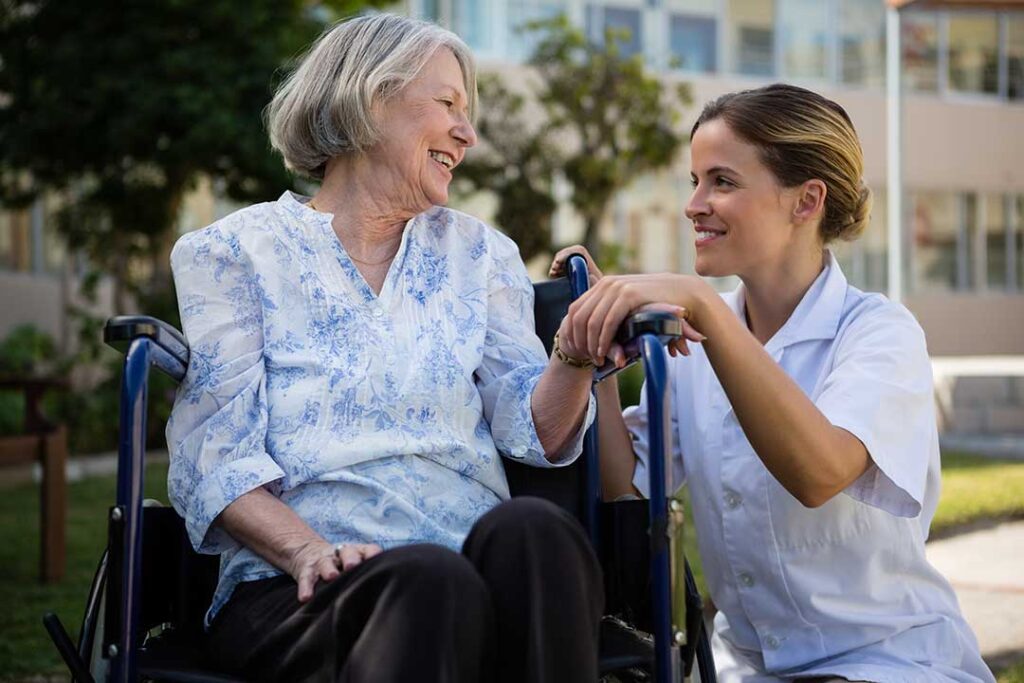
What are intergenerational activities in assisted living?
Intergenerational activities bring older adults and younger people together for shared conversation, learning, creativity, or recreation. In an assisted living setting, participants may include residents, school-age children, teenagers, college students, young adults, or family members.
These activities are more meaningful when they are designed around mutual participation rather than treating older adults as an audience. A resident might teach a card game, while a child explains a favorite drawing technique. A teenager may help record family stories, while a resident shares memories of earlier technology, holidays, or community life.
The goal is not simply to keep residents busy. Well-planned interaction can support social connection, emotional well-being, confidence, and a sense of purpose.
Why can younger and older people benefit from spending time together?
Intergenerational relationships can reduce social isolation and create regular opportunities for conversation. Residents may enjoy having new people to talk with, especially when visits are structured around an activity rather than limited to small talk.
Younger participants may also gain practical and emotional benefits. Spending time with older adults can help children and teens develop patience, listening skills, empathy, and comfort communicating across generations. They may discover that older adults have interests, humor, skills, and personal experiences that are often overlooked.
For residents, the benefits may include:
- More frequent social interaction
- Opportunities to share knowledge and personal stories
- Increased motivation to participate in activities
- A stronger sense of belonging
- Positive changes in mood
- Mental stimulation through conversation and problem-solving
These effects vary from person to person. Intergenerational activities should supplement, not replace, friendships with peers, family relationships, personal interests, and appropriate care.
Which activities work well in an assisted living setting?
The most successful programs are usually simple, flexible, and centered on a shared task. Activities should allow people with different abilities, attention spans, and communication styles to take part.
Examples include:
Reading and storytelling
Children can read short books, poems, or seasonal stories with residents. Older adults may also tell stories about their childhood, work, family traditions, or memorable events. A staff member can help prepare conversation prompts so the discussion does not depend entirely on spontaneous questions.
Arts and crafts
Painting, decorating cards, collage-making, knitting demonstrations, and simple seasonal crafts can encourage conversation without requiring constant eye contact. Projects should offer different levels of difficulty so participants can choose whether to work independently or with assistance.
Music and movement
Singing familiar songs, listening to different types of music, or learning simple rhythm activities can be enjoyable across age groups. Gentle movement may also be included, provided the activity is adapted for seated participation and individual mobility needs.
Games and puzzles
Board games, card games, word searches, trivia, and large-piece puzzles can create natural conversation. Rules may need to be simplified, printed in large type, or explained one step at a time.
Technology exchanges
Younger participants may help residents learn basic functions on a tablet or phone, such as taking a photo or making a video call. Residents can contribute by sharing stories, recipes, handwriting, photographs, or knowledge about past events. The exchange works best when both generations are recognized as teachers.
Gardening and nature projects
Container gardening, planting herbs, arranging flowers, or observing birds can connect residents and children through a hands-on task. In Sinking Spring, seasonal conditions may make outdoor activities especially pleasant during spring and early fall, while indoor plant projects can continue during colder or wetter months.

How should activities be adapted for residents with dementia or mobility limitations?
Activities should be adjusted to the person rather than expecting every resident to participate in the same way. A resident with dementia may enjoy sorting objects by color, listening to familiar music, looking through photographs, or responding to simple questions. Participation may last ten minutes rather than an entire program.
For residents with mobility limitations, tables, chairs, supplies, and pathways should be arranged to allow comfortable access. Activities can often be completed while seated. Large-handled tools, easy-grip materials, large-print instructions, and visual demonstrations may help.
Hearing and vision needs also matter. Participants should face one another, reduce background noise when possible, provide good lighting, and speak clearly without shouting. It may be helpful to limit the size of a group so residents are not overwhelmed.
A person who does not speak much may still participate by smiling, choosing colors, tapping to music, watching a demonstration, or holding a finished project. Engagement should not be measured only by verbal conversation.
What makes an intergenerational program safe and respectful?
Safety begins with appropriate supervision, clear expectations, and careful matching of activities to participants. Younger visitors should receive simple guidance about privacy, personal space, mobility equipment, and respectful communication.
Programs should also consider infection control, allergies, food safety, fall risks, and the possibility that some residents may become tired or overstimulated. Any activity involving cooking, animals, small objects, outdoor surfaces, or tools requires additional planning.
Respect is equally important. Older adults should not be portrayed as helpless, and younger participants should not be expected to entertain residents on demand. Avoid activities that make residents perform personal stories, answer embarrassing questions, or discuss medical conditions.
Consent should be ongoing. A resident may choose to observe rather than participate, leave early, or decline physical contact. Children and teens should have the same ability to set boundaries.
Are intergenerational activities helpful for residents who do not have grandchildren nearby?
Yes. Intergenerational contact does not need to depend on a resident having children or grandchildren in the area. Some residents may have limited family contact, while others may have family members who live far away or have demanding schedules.
A well-organized program can provide additional relationships without pretending to replace family. This distinction matters. Younger visitors should not be described as substitute grandchildren, and residents should not be pressured to form personal bonds. A respectful activity can still be valuable even when the relationship remains occasional and structured.
Family members may also benefit by learning new ways to participate. A relative could join a group storytelling session, help with a craft, or contribute photographs and questions for a history project.
How can families judge whether an activity is truly beneficial?
Look for signs of genuine engagement rather than assuming that any visit is helpful. Residents may talk about the activity afterward, display something they made, remember a visitor’s name, ask when the group will return, or appear more relaxed and socially connected.
It is also useful to consider whether the program is inclusive. Are residents with different cognitive, physical, cultural, and communication needs able to take part? Are activities repeated often enough to build familiarity? Do residents have choices, or are they expected to follow one format?
The strongest programs are evaluated over time. Staff can observe participation, mood, fatigue, and feedback from residents and younger visitors. Adjustments may include shorter sessions, smaller groups, quieter rooms, or different types of projects.
Intergenerational activities are most effective when they are consistent, voluntary, and based on mutual respect. In an assisted living community, a shared song, story, game, or garden project can create a useful connection while honoring the abilities and life experiences of everyone involved.
